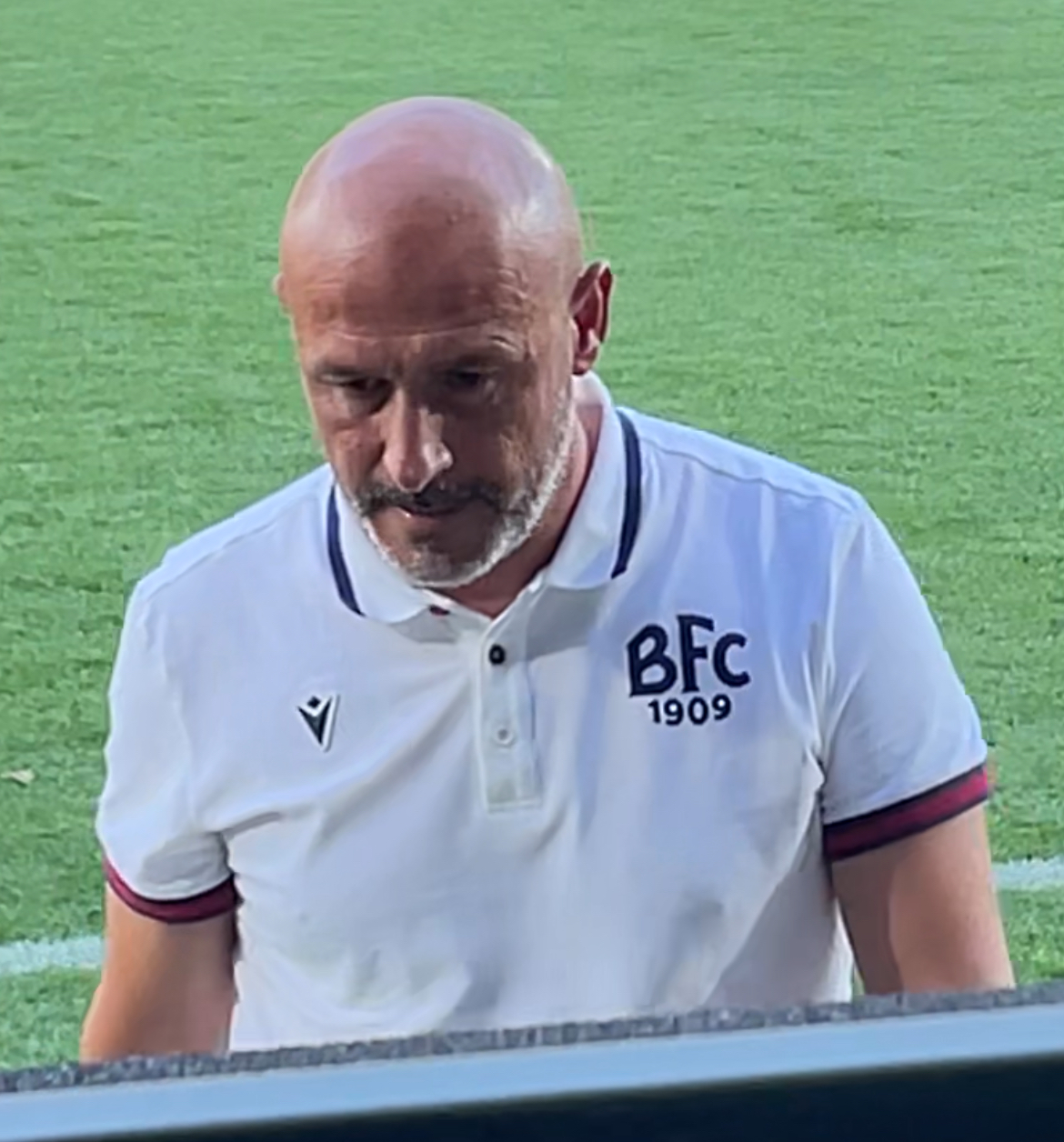
There is a particular kind of pressure that comes with inheriting someone else's miracle. When Domenico Tedesco walks into Casteldebole — Bologna's training ground — for the first time as head coach, he will do so in the long shadow of Vincenzo Italiano, a man who took a mid-table Serie A club and delivered something the city had not witnessed in over six decades: Champions League football. That is the benchmark Tedesco must now contend with, and it is, by any objective measure, a brutal one.
Bologna are closing in on the appointment of the former Belgium national team manager, according to reports emerging on Friday. The move signals the end of Italiano's two-year tenure — a spell that will be remembered as one of the most consequential in the club's modern history — and the beginning of what could either be a genuine rehabilitation story or a stark lesson in how quickly reputational capital can evaporate in elite football management.
What Italiano Built — And What Tedesco Inherits
To understand the weight of this appointment, you first need to appreciate what Italiano achieved at Bologna. His two seasons in Emilia-Romagna were built on a relentless, high-energy pressing system that overachieved on almost every projected metric. The historic Champions League qualification — Bologna's first appearance in European football's premier competition in the modern era — was not a fluke. It was the product of coherent tactical identity, squad development, and a club environment that had been carefully cultivated under the ownership of Joey Saputo's group.
Saputo's ownership model deserves particular attention here, because it is central to understanding why this appointment is more nuanced than a simple panic hire. Bologna under his stewardship have shown a consistent willingness to back ambitious, long-term footballing projects rather than reaching for the nearest available name when things need resetting. The decision to pursue Tedesco fits that pattern — this is a calculated risk, not a desperate one. The club clearly believe there is a manager worth investing in beneath the wreckage of the Belgium tenure.
The Belgium Collapse — The Story Most Outlets Will Bury
And that wreckage is significant. Tedesco's exit from the Belgium job was not a quiet mutual parting of ways dressed up in diplomatic language. It was a very public, damaging end to a project that seemed promising in its early stages but deteriorated into something considerably uglier. Belgium's elimination from Euro 2024 exposed fault lines within the dressing room that had reportedly been developing for some time — a toxic atmosphere that ultimately made his position untenable.
The specifics of those internal conflicts matter tactically as well as personally. Managing a national team with ageing superstars, competing egos, and an expectant public is a uniquely pressurised environment, but the manner of the Belgium breakdown raised genuine questions about Tedesco's ability to manage personalities at the highest level. Man-management is not a soft skill in elite football — it is as strategically important as any pressing trigger or defensive shape, and it was precisely in this area that his Belgium tenure appeared to fracture most visibly.
This is not a trivial footnote to Tedesco's CV. It sits at the centre of any honest assessment of what he brings to Bologna, and it is the question the club's sporting directors will have had to answer satisfactorily before advancing this appointment.
The Schalke Promise — Evidence That the Ability Was Real
What makes the Tedesco story genuinely compelling, rather than simply a tale of decline, is the quality of what came before Belgium. His work at Schalke 04 during the 2017-18 Bundesliga season was the kind of managerial debut that makes the entire industry take notice. He guided a club of modest resources to second place in Germany's top flight, playing structured, organised, tactically disciplined football that punched well above its weight. The analytical community was particularly impressed — Schalke under Tedesco were a team that seemed to genuinely reflect a clear tactical framework, not just a collection of motivated individuals.
That early promise established him as one of European football's more interesting emerging coaches. It earned him the Belgium job and the opportunity to manage at international level, which at that stage of his career felt like a logical, if accelerated, next step.
The Tactical Profile
Tedesco's preferred structures have generally leaned towards pragmatic, defensively-organised systems that can adapt based on opponent. He has shown willingness to use back-three formations and is comfortable with positional flexibility across his defensive and midfield lines. The challenge at Bologna is that Italiano's system was built on a very different footballing philosophy — one of aggressive verticality and high-pressing intensity. Tedesco will need to decide relatively quickly whether to adapt to what the squad already knows or attempt to impose a new identity, which carries genuine risk given the demands of European competition.
- Pressing intensity: Italiano's Bologna ranked among Serie A's most active pressing sides. Whether Tedesco maintains this will define his early identity at the club.
- Squad familiarity: Players who flourished in Italiano's system may need time to adjust to a different tactical framework — time that Champions League football does not easily afford.
- Serie A experience: Critically, Tedesco has never managed in Italian football. The rhythms of Serie A — its physicality, its tactical cynicism, its particular demands on defensive structure — represent a genuine unknown for him.
The Genuine Unknown — Italian Football
This last point is perhaps the most underappreciated element of the appointment. Tedesco has Bundesliga experience and has managed in Belgian football, but Serie A is a distinct ecosystem. The tactical sophistication of Italian coaching, the specific demands of Italian football culture, the relationship between managers and the Italian press — none of these are areas where he has existing reference points. Bologna's staff will need to provide strong structural support around him as he navigates this learning curve.
That said, foreign managers adapting successfully to Serie A is not without precedent, and the quality of Bologna's footballing infrastructure under Saputo means Tedesco will not arrive without support. The question is whether his particular strengths — tactical organisation, defensive solidity — translate effectively into a competition that rewards those qualities, even as his weaknesses — man-management under pressure, adaptability when results turn — remain the open wounds of the Belgium experience.
The Verdict: A Risk Worth Taking, But Not a Safe One
Bologna are not signing the Domenico Tedesco of 2017. They are signing a manager who needs this appointment as much as it needs him — a coach with something significant to prove, in a league he has never worked in, following an exit that left his reputation genuinely damaged. That tension is either exactly what drives a serious rehabilitation, or it is the weight that makes it impossible.
What gives this appointment credibility is the seriousness of the club making it. Bologna under Saputo do not make decisions carelessly, and the fact that they have moved for Tedesco after the Belgium collapse, rather than in spite of insufficient knowledge of it, suggests they believe the early promise was real and the collapse was circumstantial rather than fundamental. Whether they are right is the defining question of the next twelve months in Emilia-Romagna.
Source information via Get Football News Italy. Original reporting by Dribblestack editorial team.