When Strategy Meets Necessity: Decoding Marotta's Master Narrative
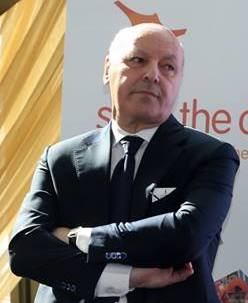
When Beppe Marotta speaks about Inter Milan's transfer philosophy as a balanced blend of academy development and seasoned acquisitions, the narrative flows with the confidence of someone articulating a deliberate long-term vision. It's a compelling story—one that resonates across Italian football's establishment, where the idea of homegrown talent married to strategic experience feels both modern and rooted in tradition. But beneath the carefully crafted messaging lies a more uncomfortable reality: Inter's "mix" philosophy is as much a function of financial constraint as it is ideological choice.
The distinction matters enormously for Inter's supporters and investors. A club pursuing this approach from a position of strength—say, Bayern Munich or Real Madrid—can afford to be magnanimous about youth integration while maintaining title-winning ambitions. But Inter, despite their recent Serie A successes, operates under a fundamentally different pressure: the suffocating weight of Financial Fair Play regulations and ownership limitations that have progressively tightened since the pandemic.
The Spending Reality: Juventus and Milan Leave Inter Behind
Consider the raw spending data across Italy's elite over the past three seasons. Juventus, despite their domestic dominance crumbling in recent years, has maintained an average annual transfer spend of €65-75 million. AC Milan, under their new ownership, has aggressively invested €70-90 million annually. Inter, by contrast, has consistently operated within a €40-55 million window—a gap of nearly 50% in some seasons.
The distinction becomes sharper when examining net spend (outgoings minus incomings). Inter's model has become increasingly reliant on generating revenue through player sales. In the 2022-23 cycle alone, Inter netted approximately €120 million in sales—compared to their acquisition budget of roughly €45 million. This wasn't ancillary strategy; it was foundational. Without those sales, Inter's squad building would have been dramatically constrained.
Juventus, meanwhile, has maintained greater flexibility to absorb losses on speculative signings or aging players, precisely because their revenue base—both from ownership and historical commercial dominance—provides cushion. This isn't conjecture; it's embedded in the financial statements both clubs file with Italian regulatory authorities.
The Academy-as-Asset Pipeline
Here's where the analysis becomes pointed: not every academy player integrated into Marotta's "mix" is destined for first-team permanence. In fact, the structure increasingly resembles a carefully calibrated development-and-export operation.
Take the cases of players like Filippo Inzaghi's protégés or academy graduates who receive limited first-team exposure. The pathway is often predetermined: establish sufficient profile at Inter to attract attention from mid-tier European clubs, then orchestrate a sale that generates 15-25 million euros for the parent club. It's not sinister—it's how modern football functions—but it's categorically different from the rhetoric of "developing young talent for the future."
The players genuinely expected to anchor Inter's future squad—Alessandro Bastoni, Lautaro Martínez, and potentially emerging defenders from the Primavera—represent the exception rather than the rule. For the majority of academy products, "integration" means 5-10 appearances in cup competitions or end-of-season dead rubbers, sufficient to establish market value without disrupting the competitive balance of Serie A fixtures.
This mirrors, almost exactly, what Juventus executed post-Cristiano Ronaldo. Unable to maintain their previous spending trajectory after Ronaldo's 2021 exit, Juventus pivoted toward youth integration—but only selectively. Players like Juan Cuadrado and Giorgio Chiellini were retained as the authentic "experience" anchors, while academy products like Matheus Pereira and Nicolò Fagioli were developed, loaned strategically, and reintegrated only when their market value had peaked or their potential aligned with the team's needs.
The Uncomfortable Comparison: Selling Club Trajectory
The question that animates Inter's fanbase, whether explicitly stated or lurking beneath surface discourse, is this: are we witnessing strategic evolution or incremental decline? More precisely, is Inter's present structure a temporary accommodation to FFP regulations, or the architectural foundation of a permanent shift toward the selling-club model?
The evidence leans toward the latter, if not by design then certainly by necessity. Consider:
- Revenue dependency on sales: Over 60% of Inter's recent transfer activity (net positive) derives from player sales rather than ownership investment. Compare this to Milan's model, where ownership capital injection has offset squad turnover.
- Average squad age regression: Inter's squad average age has declined from 27.8 years (2021-22) to 26.3 years (2023-24)—a subtle but significant shift toward younger, more tradeable assets.
- Commercial ceiling: Despite Coppa Italia and Supercoppa successes, Inter's commercial revenue (sponsorships, merchandising, match-day) has plateaued at approximately €180 million annually, significantly behind both Milan and Juventus.
Marotta's "mix" philosophy thrives in the narrative space precisely because it allows the club to present constraint as choice. The President can point to academy graduates receiving opportunities, highlight the retention of key players, and emphasize long-term thinking—all accurate statements—without acknowledging the FFP ceiling that makes alternatives impossible.
Can Inter Actually Compete, or Are They Managing Decline?
This is the analytical crux. Inter has won the past two Serie A titles, so declarations of decline sound premature. Yet titles in Serie A are increasingly achievable without €100+ million annual net spend. The league's competitive standard has fragmented; Juventus has eroded, and Milan's revival remains incomplete. Inter's dominance may reflect relative weakness in competitors rather than structural strength in their own position.
The true test arrives in European competition—specifically the Champions League. That tournament punishes "mix" strategies relentlessly. You cannot compete against PSG, Manchester City, or even Bayern Munich with a squad assembled through academy development and €40-50 million acquisition budgets. Europe's elite have moved decisively beyond that threshold. Inter's Champions League performance over recent seasons—quarterfinal exits, group stage disappointments—suggests the "mix" provides sufficient domestic dominance but insufficient European capability.
If Inter's objective is securing Serie A titles while maintaining financial sustainability, the current model succeeds. If the ambition extends to Champions League contention or competing for continental trophies, the strategy's limitations become immediately apparent.
The Ideological Question
Does Marotta genuinely believe in youth-and-experience integration as superior strategic architecture? Possibly. Does he prefer it because it's the only financially viable path forward? Almost certainly. The two aren't mutually exclusive, but clarity matters. Inter's supporters deserve honesty: this is pragmatism born from constraint, executed with intelligence and discipline, but pragmatism nonetheless.
The question of whether Inter pivots toward a permanent selling-club model hinges on external factors—primarily whether ownership investment increases, or whether regulatory environment shifts to provide relief. Without one of these developments, the present trajectory suggests incremental repositioning from title-contender to domestic administrator: competent, profitable, but ultimately constrained.
Source information via Football Italia. Original reporting by Dribblestack editorial team.