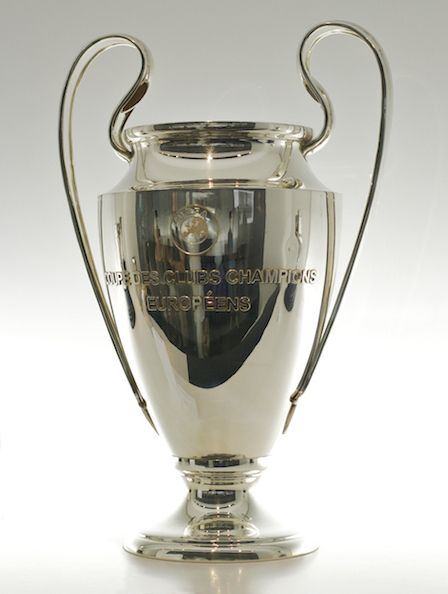
There is a particular cruelty in being nearly good enough. Arsenal fans have lived with the weight of decades without a Champions League title, and under Mikel Arteta they have built something that genuinely feels proximate to the elite — a side with identity, intensity, and tactical coherence. Yet the gap between competing in the Champions League and winning it is not a marginal one. It is structural. And pretending otherwise does a disservice to both the fanbase and the honest analysis this squad demands.
This is not the lazy "they just need a striker" conversation that every outlet defaults to when Arsenal's name comes up in a European context. That take, while not entirely wrong, misses the systemic nature of what has repeatedly exposed Arteta's side in knockout football. The real question heading into 2026-27 is whether the vulnerabilities are fixable within the constraints Arsenal operate under — or whether they represent something more deeply baked into the Arteta model.
The European Profile Problem
The most instructive analytical lens for understanding Arsenal's ceiling isn't their Premier League form — it's the divergence between that form and what their data looks like specifically in Champions League knockouts. This distinction matters enormously. Arteta's side has consistently shown a different, more vulnerable tactical profile in continental football, and conflating the two datasets produces a falsely optimistic picture.
In European knockout matches, Arsenal have faced teams with the structural sophistication to exploit precisely the areas where the Arteta system carries inherent risk. The high defensive line that works so effectively in the Premier League — where the pace of transition, the press, and the physical intensity are calibrated around a domestic reference frame — becomes a liability against elite European sides who can bypass the press with vertical ball progression and exploit the space in behind with technically superior forwards.
The pressing trap, so devastating in the league, requires near-perfect collective execution under continental pressure. When it breaks down — and in high-stakes European moments, under mental and structural duress, it has — Arsenal's back four can be caught in deeply uncomfortable positions with limited cover. This is not a criticism of the system in isolation. It is a recognition that the margins at Champions League level are different, and that Arsenal's specific implementation carries identifiable exposure points that elite opponents have learned to target.
Wide Areas: Depth or Dependency?
One of the under-examined dimensions of Arsenal's European struggles is the configuration of their wide areas in terms of both personnel and positional responsibility. The Arteta system places significant demands on the wide positions — both in terms of defensive tracking and the ability to stretch play and create numerical superiority in transition. When those areas are functioning, Arsenal look like a top-four European side. When the key operators in those channels are unavailable, injured, or below their ceiling, the drop-off in effectiveness is steep.
Squad depth in wide areas has been an ongoing structural concern. The difference between Arsenal's best-case wide configuration and their contingency options is too large for a club with genuine Champions League title ambitions. Elite competition winners — and we need only look at how the best sides in Europe are constructed — carry two credible, high-level options in each wide zone. The fallback cannot be a significant step down in quality. At that level, opponents identify the weakest link and suffocate through it, particularly in two-legged knockout ties where tactical adjustments across 180 minutes are paramount.
This is a resolvable problem in principle, but it requires investment that is intelligent rather than just expensive. The profile of player needed isn't simply a winger with Premier League pedigree — it is someone who understands how to function within Arteta's positional structure while delivering output in the specific contexts of European football, where pressing triggers differ and transitional moments are more sparing and decisive.
The Defensive Midfield Cover Question
Perhaps the most strategically consequential gap, and the one least discussed in mainstream coverage, is the depth and profile of Arsenal's defensive midfield cover. The pivot is the engine room of Arteta's structure. When it functions optimally, Arsenal control territory and tempo in a way that makes them look genuinely world-class. But in European knockout football, the pivot faces different problems.
Elite continental sides have the technical quality to draw the defensive midfielder out of position through intricate combinational play, creating passing lanes into the spaces between Arsenal's lines. They also have the capacity to overload centrally and bypass the press, leaving the defensive midfielder exposed in recovery scenarios. Cover for this position — genuine, like-for-like cover that doesn't compromise the system's integrity — is a non-negotiable requirement for a club serious about European progress.
The question of whether Arsenal carry sufficient cover in this zone, particularly given the physical demands the Arteta system places on midfielders across a long season with European football adding fixture congestion, is one that the club's recruitment department must answer honestly before the window opens.
The FFP and Competition Reality
None of this analysis exists in a vacuum. Arsenal are operating within financial fair play constraints that are real, and they are competing for players in a market where Europe's wealthiest clubs — those with state backing or commercial revenue structures that Arsenal cannot match — will be pursuing many of the same profiles. This is the uncomfortable truth that shapes what is actually achievable in the summer window.
The implication is that Arsenal cannot simply spend their way to the missing pieces. The recruitment must be precise. Each addition needs to solve a specific structural problem — the wide depth deficit, the defensive midfield cover gap — rather than representing a headline signing designed to signal ambition. Arteta and the recruitment team deserve credit for operating with genuine positional and tactical specificity in the market, but the 2026-27 campaign will test whether that approach can deliver at the level required to navigate to a Champions League final.
Fixable or Fundamental?
Here is the honest analytical conclusion: Arsenal's European weaknesses are not fundamental flaws in the Arteta project. The system is coherent and the squad has genuine quality. But the specific gaps — wide depth, defensive midfield cover, and the tactical adjustments required specifically for European knockout football — are structural enough that they will not resolve themselves through a good run of form.
They require deliberate, intelligent intervention in the transfer market. They may require Arteta himself to develop additional continental adaptability in his in-game management, particularly around how he sets up defensively when Arsenal face elite technical sides in transition-heavy knockout ties. And they require the club to be honest that the gap between where they are and where they need to be is real — not insurmountable, but real.
Arsenal fans have waited long enough to be spoken to honestly about that gap. This squad is close. Close is not enough. The work for 2026-27 starts with understanding exactly why.
Source information via Planet Football. Original reporting by Dribblestack editorial team.