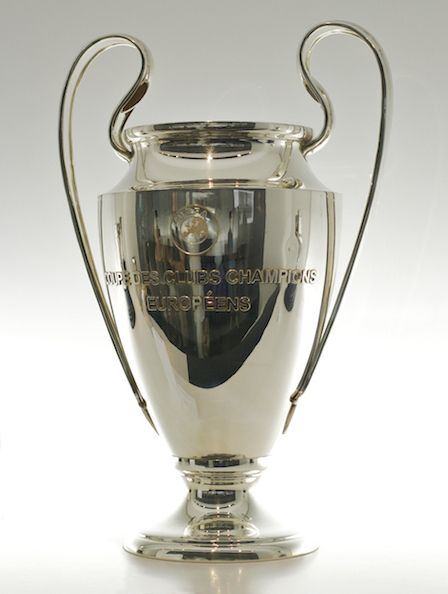
It was always going to be a set piece. That much felt written. Arsenal's season — relentlessly structured, achingly precise, built on the kind of defensive architecture that turns football matches into engineering problems — was always going to hinge on something fixed, something rehearsed, something that crystallised everything Mikel Arteta has spent years constructing at the Emirates. The cruel joke, the twist that football reserves for its most dramatically loaded moments, is that Gabriel Magalhães found himself at the centre of that moment in the worst possible way.
And yet — and this is the argument worth having — Arsenal just went three full hours against Paris Saint-Germain in a Champions League final, in a humid cauldron in Budapest, and were not beaten in open play. They were not outmanoeuvred. They were not exposed. They were separated from a European title by the narrowest, most arbitrary mechanism the sport possesses. That should mean something. The debate is whether it actually does.
What This Final Revealed About the Arsenal Project
There is a specific kind of ambivalence that Arteta's Arsenal provokes, and it is worth being honest about where it comes from. This is a team that has been assembled with extraordinary intentionality — every press trigger mapped, every defensive transition choreographed, every set piece routine drilled to the point of automation. The results speak for themselves at the macro level: consistent top-four finishes, genuine title challenges, and now, undeniably, a Champions League final appearance. But the emotional experience of watching them can, for a certain kind of football observer, feel closer to admiring a spreadsheet than witnessing something alive.
PSG, for all their own tactical evolution under their current setup, carry a different energy. There is flair embedded in their identity at an institutional level, a sense that the unexpected is always possible. Arsenal, by deliberate design, have tried to eliminate the unexpected. That tension — between the beautiful and the optimised — is not new to football, but rarely has it been staged on quite this grand a platform.
What the Puskás Arena final did, across those brain-mangling three hours, was stress-test every assumption about both sides. And Arsenal, it must be said, did not buckle under that stress. They matched PSG's quality in the press, held their defensive shape through waves of sustained pressure, and created enough to win the game within normal and extra time. The shootout is not a reflection of footballing merit. Everyone knows this. Everyone pretends otherwise when it suits them.
Myles Lewis-Skelly and the Future Arriving Early
If there was a single image from this final that cut through the tactical noise, it was Myles Lewis-Skelly performing at that level, on that stage, without appearing to notice the occasion. This is a young player — absurdly young for a moment this significant — and his performance across three hours of the most compressed, high-intensity football the club calendar offers was not merely promising. It was authoritative.
Lewis-Skelly's involvement represents something structurally significant for Arsenal beyond the biographical romance of a teenager on the big stage. Arteta's system demands extreme positional literacy and emotional composure simultaneously — the ability to hold a press trigger while reading the second-phase transition, to maintain attacking width without compromising the defensive block. These are not skills that typically arrive in players before their mid-twenties. That Lewis-Skelly appears to carry them already tells you something important about both the player and the coaching environment that produced him.
In tactical terms, his positioning throughout the final suggested a player already operating on an advanced processing level — recognising space before it opened, switching between attacking and defensive roles with a fluency that older, more experienced players in the same position sometimes fail to achieve. On the biggest night in the club's recent history, he looked like he belonged. More than that: he looked like he was enjoying it.
The Set Piece Problem — And What It Actually Means
Arsenal's relationship with set pieces has defined much of the Arteta era, and it defined this final in the most painful way possible. Gabriel's role in the decisive moment — the specific nature of which turned the tie — arrives as a brutal piece of dramatic irony when you consider how central set-piece excellence has been to this team's identity. Arsenal under Arteta have been among the most dangerous teams in European football from dead-ball situations. The data on this has been consistent across multiple seasons. They score from set pieces. They concede from them less frequently than most.
Which makes what happened here almost literary in its cruelty. The one mechanism Arteta's side has most deliberately tried to weaponise became the mechanism that undid them. Football's writers could not have constructed it better.
Does This Finally Settle the Debate?
The emotional politics of Arsenal under Arteta are, at this point, a legitimate critical conversation. There are supporters, analysts, and neutral observers who find this team difficult to fully embrace — not because they are bad, but because there is a sense in which the joy has been methodically extracted from the process. The football can be brilliant. It can also feel like watching someone solve a very complicated puzzle very efficiently, and being asked to feel something about it.
Here is the counter-argument, and the final makes it more forcefully than any league result could: a team built on structure and system just competed, at full stretch, for three hours against one of the most expensively assembled squads in the history of the sport, and were not found wanting. That is not nothing. That is, in fact, almost everything that Arteta's methods were designed to achieve — competitive parity with teams operating at a fundamentally different financial level, sustained over a full season and into the game that matters most.
Whether that is enough to convert the ambivalent is genuinely unclear. Football fandom is not purely rational, and the people who find it hard to love this Arsenal side are not wrong to feel what they feel. But they should at least acknowledge what they are watching. This is a team of genuine Champions League quality. It took a penalty shootout to beat them. It always seemed likely, somehow, that it would come down to exactly this kind of moment — and in a strange, gutting, unmistakably Arsenal way, it did.
The season ends in the cruelest possible fashion. The question it leaves behind is bigger than the result: what exactly do you need from this team before you let yourself believe in it?
Source information via The Guardian Football. Original reporting by Dribblestack editorial team.